The Bali property market in 2026: demand flat, supply rising
Bali received 6.95 million foreign visitors in 2025, the most it has ever recorded (BPS Bali). January to July 2026 ran 1.98% behind the same months of 2025, and July was the first month of the year slightly above its 2025 level. Demand isn't collapsing. It has leveled off near the record, and that's the backdrop for any purchase made this year.
Supply is the moving part. Over the year to September 2026, short-term listings in Pererenan grew 45.6% and revenue per listing fell 27.9% (AirROI). Canggu lost 23.1% and Ubud 19.3%. New villas are splitting the same guests, so an investment case built on last year's occupancy is already out of date.
The third change is regulation. Indonesia's Tourism Ministry began removing unlicensed rentals from booking platforms on August 1, 2026. For a buyer, that's good news with a condition attached: licensed villas face less grey-market competition, and a villa that can't get a license can't legally earn.
Source: BPS Bali, 2025 and January–July 2026, via Antara, September 1, 2026; AirROI, trailing 12 months to September 2026; Ministry of Tourism, delisting from August 1, 2026
The villa we modeled, and why these numbers
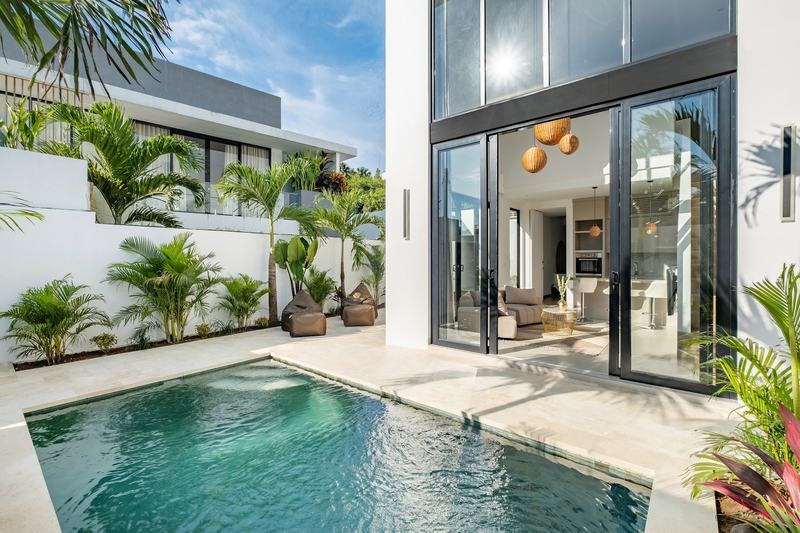
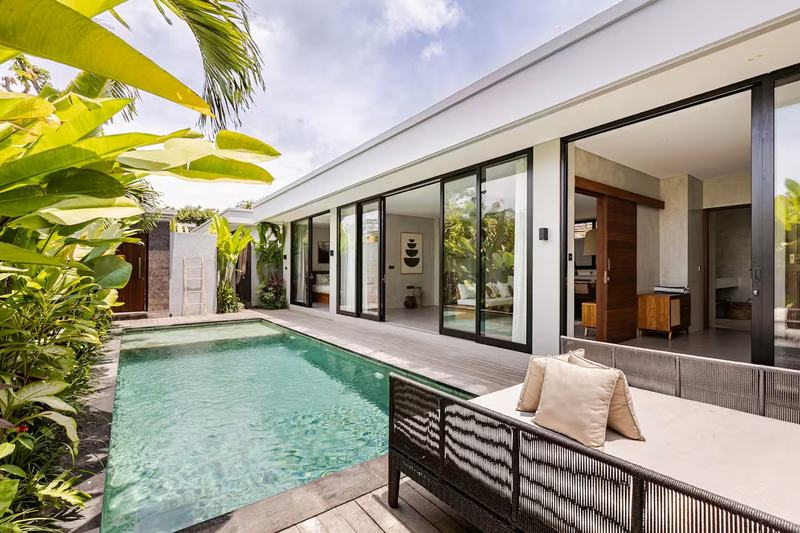
We picked the most common purchase we see: a two-bedroom pool villa in Canggu at Rp 4 billion, on a leasehold with 30 years left. Budget roughly 10% on top of the price for closing costs and setup: the notary, due diligence, furniture and a cash reserve. That puts the real outlay at Rp 4.4 billion.
The villa lets at Rp 2.5 million a night, below the Canggu average, because that average includes bigger villas. The owner keeps about 60% of revenue after management (18%), upkeep and empty nights (12%) and the 10% final tax for Indonesian tax residents. We cut the first year to 70% of planned occupancy while the villa collects reviews, and we budget a Rp 200 million furniture refresh in year six.
| Input | Value | Where it comes from |
|---|---|---|
| Price, 30 years left | Rp 4.0 bn | Typical 2-bedroom asking price, our catalog |
| Closing costs and setup | Rp 0.4 bn | Notary, due diligence, furniture, reserve |
| Nightly rate, year one | Rp 2.5 mn | Below the Canggu average of Rp 3.79 mn (AirROI) |
| Share the owner keeps | About 60% | After management, upkeep, vacancy and 10% tax |
| Year one | 70% of plan | Time to build ratings and reviews |
| Selling costs at exit | 8.5% | Agent, notary and tax on the sale |
Source: Rise Real Bali yield model and catalog, September 2026; AirROI, Canggu, trailing 12 months; PP 34/2017 on the 10% final tax on rent

Want the numbers for your budget?
Gusti Ayu will send the net yield math for your budget on WhatsApp.
Three outcomes over ten years
Occupancy moves the result more than anything else, so we ran three cases. In the cautious one, the villa books half its nights, rates never rise and the buyer at the end pays 10% less than the lease math suggests. The base case books 60% and lets rates and prices keep pace with Indonesian inflation, about 2.5% a year. The strong case books 70% with 5% annual growth.
The spread is wide. The cautious case returns Rp 4.65 billion on Rp 4.4 billion invested, so your money sat for ten years and earned almost nothing. The base case returns Rp 6.48 billion, about 1.5 times the outlay. The strong case nearly doubles it.
- Rp 1.06
- Rp 1.47
- Rp 1.91
| Case | Rent kept, 10 years | Sale, after costs | Total back | IRR |
|---|---|---|---|---|
| Cautious: 50%, flat rates | Rp 2.46 bn | Rp 2.20 bn | Rp 4.65 bn | 0.7% |
| Base: 60%, +2.5% a year | Rp 3.36 bn | Rp 3.12 bn | Rp 6.48 bn | 5.2% |
| Strong: 70%, +5% a year | Rp 4.45 bn | Rp 3.98 bn | Rp 8.43 bn | 9.0% |
Source: Rise Real Bali 10-year model, September 2026; inflation assumption from Bank Indonesia's 2026 target of 2.5% ± 1%
Why the lease matters more than the yield
A leasehold is a countdown. After ten years, our villa has 20 years left instead of 30, and the next buyer pays for 20. Even with prices rising 2.5% a year, the sale brings in less than the purchase price. The rent does the work, and the exit only hands back part of the capital.
That's why we price a leasehold per remaining year. Rp 4 billion for 30 years works out to about Rp 133 million per year held. Offer the identical villa with only 20 years to run at that price and each year costs Rp 200 million, and its return drops by a third before you've let a single night. An extension clause helps only if the contract sets the price and terms of the extension. Our leasehold extension guide shows what to look for.
Source: Rise Real Bali model; Kepmen ATR/BPN 1241/2022 on the minimum price for foreign ownership; PP 18/2021 on land rights
Payback takes 11 years or more, not 7
Brochures often quote a payback period of six or seven years. That figure divides the price by a year of gross revenue. Divide the full outlay by what actually reaches the owner and the base case needs about 12 years of rent to return the Rp 4.4 billion. At 70% occupancy it's closer to 10.
None of that makes the villa a bad asset. It means the sale at the end is part of your return, and a short lease makes that sale smaller. Our rental yield guide breaks down the gap between gross and net by area.
Source: Rise Real Bali yield model, September 2026
Being a non-resident costs about 1.4 points of IRR
If you aren't an Indonesian tax resident, Article 26 of the Income Tax Law takes 20% of the gross rent, twice the 10% a resident pays, unless a tax treaty lowers it. In our base case, that single change pulls the IRR from 5.2% to 3.8% and takes Rp 600 million off ten years of income.
Your home country may tax the same income again, with a credit for what Indonesia withheld. Check that before you compare Bali with a market at home. A 5% return that your own tax office then halves isn't a 5% return.
Source: Income Tax Law, Article 26; PP 34/2017; Rise Real Bali model
When Bali works as an investment, and when it doesn't
We talk people out of purchases regularly. The pattern is consistent, and it has little to do with which area is fashionable this year.
Likely to work
- A horizon of seven years or more
- At least 25 years left on the lease, or an extension priced in the contract
- A zone that allows tourist accommodation and a license the villa can actually get
- Numbers that hold at 50% occupancy, not only at 70%
- Money you won't need back for years
Likely to disappoint
- A yield quoted gross, with no cost lines under it
- A lease under 20 years, priced as if the term didn't matter
- A plot on farmland or in the coastal setback
- A plan to flip it fast
- A nominee holding the land in someone else's name
Source: Rise Real Bali buyer practice, 2023–2026
How to stress-test a villa before the deposit
Run the seller's projection at 50% occupancy and with today's nightly rates, not last season's. If the villa still covers its costs and earns a few points net, you have a margin of safety. If it only works at 70%, you're betting on the good case.
Then check the three things the model can't fix later: the zoning under the local plan (RDTR), the building approval and certificate of occupancy, and the years left on the land lease. Our due diligence checklist covers all three in order.
- Cut occupancy to 50%
If the net yield drops below 5%, the price is too high for the area.
- Divide the price by the years left
Compare the cost per year of tenure with similar villas nearby.
- Apply your own tax rate
Resident 10%, non-resident 20%, plus whatever your home country adds.
- Price the exit
Value the lease with ten fewer years and take off 8.5% for selling costs.
Source: Rise Real Bali practice, 2023–2026
Test a real villa against the model
Pick a villa from our catalog, or start with an area page such as Uluwatu or Ubud. Send us the listing, your tax residency and how long you plan to hold, and we'll run all three cases on that exact villa before you pay anything.
What this means for buyers
- In our base case, a Rp 4 bn Canggu leasehold returns about 1.5 times the outlay over ten years, an IRR near 5%.
- Occupancy decides the outcome: 50% barely returns the money, 70% nearly doubles it.
- On a leasehold, the rent earns the return and the sale only gives back part of the capital, so the years left drive the price.
- Non-resident owners lose about 1.4 points of IRR to the 20% withholding tax.
FAQ
Is buying property in Bali a good investment in 2026?
It can be for a buyer who wants rental income over seven years or more. Our 10-year model of a Rp 4 billion Canggu leasehold gives an IRR of about 5% in the base case, 0.7% if occupancy stays at 50% and 9% at 70% occupancy with rising rates (Rise Real Bali, September 2026).
What is the realistic rental yield on a Bali villa?
After management, upkeep, vacancy and tax, we see well-run villas return 6–10% a year. Top spots such as Uluwatu can reach 8–12%. Brochure figures of 15–20% are usually gross revenue divided by price.
How long does it take to pay back a Bali villa?
From rent alone, about 12 years at 60% occupancy and closer to 10 at 70%, once you count the notary, furniture and a cash reserve. Six or seven years usually means the calculation used gross revenue.
Do Bali property prices go up?
Agency estimates put land price growth at 15–30% across 2024–2026, but a leasehold villa also loses value as its term runs down. Our base case lets prices grow 2.5% a year, and the sale still returns less than the purchase price after ten years.
Is the Bali property market saturated?
Parts of it are. Over the year to September 2026, short-term listings in Pererenan grew 45.6% while revenue per listing fell 27.9% (AirROI). Uluwatu held its revenue per listing, alone among the areas AirROI tracks for us.
How we know this
The model follows one villa for ten years: a two-bedroom pool villa in Canggu priced at Rp 4 billion with 30 years left on the lease, plus 10% for the notary, due diligence, furniture and a cash reserve. Revenue is the nightly rate times 365 times occupancy, with year one at 70% of plan. The owner keeps 60% of revenue after an 18% management fee, 12% for upkeep and empty nights and the 10% final tax for tax residents, or 50% as a non-resident under the 20% withholding. A Rp 200 million furniture refresh falls in year six. The exit values the lease at the same price per remaining year, grown by each case's annual rate, and deducts 8.5% for commission, notary and tax. We calculate IRR on annual cash flows, with income not reinvested. Market figures come from BPS Bali and AirROI. Treat it as a model. It doesn't promise income.
- BPS Provinsi Bali, foreign arrivals, 2025 and January–July 2026
- AirROI, Bali short-term rental data by area, trailing 12 months to September 2026
- Ministry of Tourism of Indonesia, delisting of unlicensed rentals from August 1, 2026
- Bank Indonesia, 2026 inflation target
- PP 34/2017 and Income Tax Law, Article 26
- PP 18/2021 on land rights; Kepmen ATR/BPN 1241/2022
- Magnum Estate, Bali Property Prices 2026
- Rise Real Bali catalog, yield model and 10-year model, September 2026
By Dmitrii Rogov, Rise Real Bali.
Rise Real Bali is a real estate agency in Bali. We write from the deals we handle and from public data, and we name our sources.
This report is published under the CC BY 4.0 license. You may quote, republish and use the figures and text commercially if you credit "Rise Real Bali", name the license and link to this page. Photos and renderings are not covered by the license: their rights belong to the developers and other rights holders.
Share
WhatsApp