
Short stays: the visa on arrival and the e-VOA
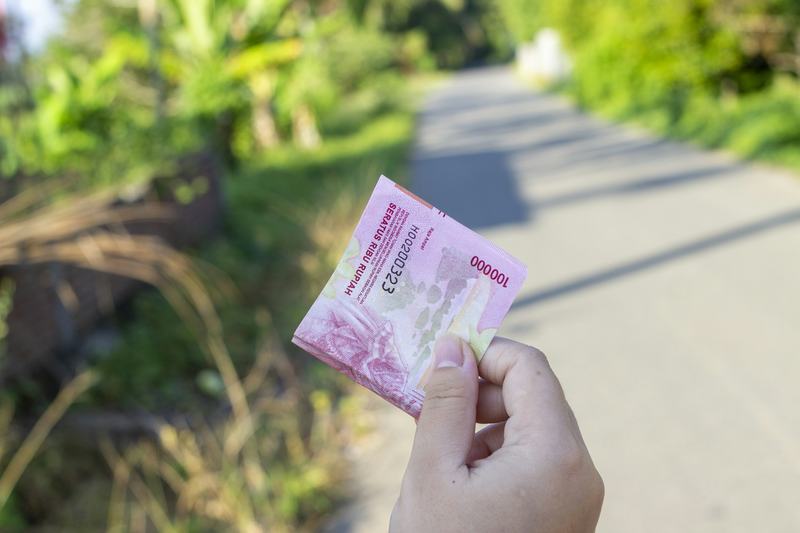
A visa on arrival costs Rp 500,000 and gives 30 days. You can extend it once, for another 30 days at the same price, so 60 days is the ceiling. The electronic version, the e-VOA, costs the same. Buy it online at least two days before you fly and you skip the payment counter at arrivals.
The extension is now fully online, with no trip to an immigration office. The Yogyakarta immigration office puts the window at no earlier than 14 days after arrival and no later than seven days before the permit runs out. Every foreign visitor to Bali also pays a Rp 150,000 tourist levy once per entry, through the Love Bali system.
| Option | Stay | Government fee |
|---|---|---|
| Visa on arrival or e-VOA (B1) | 30 days + one 30-day extension | Rp 500,000 + Rp 500,000 |
| Multiple-entry visitor visa (D1), one year | Up to 60 days per entry | Rp 3,000,000 |
| D1, two years | Up to 60 days per entry | Rp 5,000,000 |
| D1, five years | Up to 60 days per entry | Rp 10,000,000 |
| Bali tourist levy | Once per entry | Rp 150,000 |
Source: evisa.imigrasi.go.id, e-VOA section; Yogyakarta immigration office, visa on arrival extension guidance; PP 45/2024; Love Bali
Overstaying costs Rp 1 million a day
The fine is Rp 1,000,000 for every day past your permit, with no grace day, and a delayed flight doesn't count as a reason. Past 60 days, or if you don't pay, you face detention, deportation and an entry ban. Law 63/2024 raised the maximum ban to ten years, which can be extended by ten more.
Back-to-back visa runs aren't banned by any rule we could find. Stories about refusals on the third run come from travel blogs, not from immigration. Still, a string of tourist entries is a poor base for living here, and the D1 or a KITAS costs less than the flights.
Source: Law 6/2011 on immigration, Article 78, as amended by Law 63/2024; Surakarta immigration office; Gerbang Kepri, February 18, 2026

Not sure which structure fits you?
Gusti Ayu will send a short answer for your case on WhatsApp.
The five KITAS routes owners actually use
A KITAS is a limited stay permit, usually for one or two years. Pick it by the source of your money. Where a rule names a foreign-currency amount, we show rupiah at Rp 17,883, the JISDOR fixing for September 22, 2026.
For the E33G, remote workers prove roughly Rp 1.07 billion of yearly earnings from abroad and keep around Rp 35.8 million in the bank for three months running. It runs for one year and isn't extended: you apply again. The E28A investor permit goes to directors and commissioners who personally own Rp 10 billion or more in shares of an Indonesian company.
| Permit | Main condition | Term | Can you work here? |
|---|---|---|---|
| Work, E23 | Sponsor is an Indonesian company, plus ≈ Rp 1.79 mn a month levy per foreign worker | 6–24 months | Yes, for that employer |
| Investor, E28A | Rp 10 bn of your shares in a PT PMA | 1–2 years | Only in your own company |
| Remote worker, E33G | ≈ Rp 1.07 bn a year from abroad | 1 year, reapply | Only for clients abroad |
| Second Home, E33 | Rp 2 bn in a state-owned bank | 5 or 10 years | No |
| Retirement, E33E | Age and income rules, see below | Up to 5 years | No |
Source: Emerhub, XPND, InvestinAsia and Fragomen permit guides, 2026; visa-indonesia.com on the DKP-TKA levy
Second Home and retirement permits
The Second Home permit gives five or ten years for Rp 2 billion held in a state-owned Indonesian bank. Instead of the deposit, you can show a property worth about Rp 17.88 billion. After approval you have 90 days to place the money, and employment here isn't allowed. For an owner whose savings would sit in a bank anyway, it's the simplest long permit there is.
The retirement index, E33E, has conflicting published terms, so confirm it on the day you apply. The immigration site, as indexed in 2026, lists an age of 55 and three months of statements with at least about Rp 35.8 million. Several consultants describe age 60, a pension of about Rp 53.6 million a month and a pledged deposit of about Rp 894 million. On the older retirement KITAS, one year plus four extensions takes you to five years, and then a KITAP.
Source: Emerhub, Second Home visa guide, 2026; imigrasi.go.id E33E page; Ponorogo immigration office; Lets Move Indonesia, 2026
KITAS or KITAP
A KITAP is a permanent stay permit. It lasts five years and renews without a cap on the number of times. You don't apply for one on day one: you earn it by holding a KITAS in the same category for a continuous period.
Sources agree on two years of marriage for spouses of Indonesians. For work, investor and retirement permits they cite three to four continuous years, and some give investors up to five. Continuity is the key word. Changing employer, or re-registering the company that sponsors you, usually restarts the clock.
KITAS
- One or two years, renewed
- Tied to a sponsor, an investment or a deposit
- What most owners hold in their first years
KITAP
- Five years, renewable without a limit
- Needs two to four years of continuous KITAS in the category
- A student permit never converts
Source: Livenworkindonesia and Noble Asia on spouse permits; Lets Move Indonesia and Emerhub, 2026
What a KITAS gets you as an owner
Buying property doesn't give you a visa, and the two exceptions set a high bar: the Second Home permit and the ten-year Golden Visa accept property worth about Rp 17.88 billion. The dependency runs the other way. Several things an owner needs only open once you hold a stay permit.
A right-to-use title (Hak Pakai) requires a foreigner who lives in Indonesia, so a KITAS or KITAP comes before that kind of purchase. Banks want to see a KITAS, KITAP or Golden Visa before they open a standard account. You also need one for an Indonesian driving license and for the state health insurance, BPJS.
- Hak Pakai title in your own name
- An Indonesian bank account
- A local SIM C license for a scooter
- State health insurance (BPJS Kesehatan)
- A tax number (NPWP) through Coretax
Source: PP 18/2021 on land rights; Bank Mandiri account rules, 2026
The tax side of a long permit
A long permit can move you into Indonesian tax residency before you've spent 183 days here. Tax directorate rule PER-23/PJ/2025 keeps three tests: living in Indonesia, more than 183 days in any 12 months, or an intention to live here. It counts a KITAP, or a stay permit longer than 183 days, as evidence of intention, KPMG noted in February 2026.
Residents file a yearly return and pay 5–35% on worldwide income. Non-residents pay a flat 20% on Indonesian income such as rent. Remote workers should expect the question too: the E33G is aimed at people who live here, and advisers treat its holders as likely residents. The NPWP and tax residency guide walks through the numbers.
Source: Income Tax Law, Article 2; PER-23/PJ/2025; KPMG Indonesia, February 2026; Emerhub, tax planning for KITAS holders, March 17, 2026
Choosing, in the order that saves money
Start with where your income is earned. If your clients are abroad and you clear the threshold, the E33G is the most direct route, with one drawback: you repeat the whole process each year. If you're setting up a PT PMA anyway, for a right to build (HGB) or to run a rental business, the E28A comes out of the same structure. Our PT PMA guide explains that setup.
If you aren't working and have savings, compare the Second Home permit with the Golden Visa. The first asks Rp 2 billion in a bank. The second asks about Rp 6.26 billion, parked in Indonesian bonds, shares or funds for the full five years.
- Name your income source: abroad or in Indonesia
- Decide whether you need a company for other reasons, such as HGB land or a rental license
- Work out your tax status before you file, not after
- Confirm thresholds on the day you file
- Plan for the KITAP clock restarting if you change sponsor
Talk it through with us
Tell us how long you'll spend in Bali each year and how you earn. We'll say which permit fits the property you're looking at and model it on real listings with the tax status that goes with it.
What this means for buyers
- A visa on arrival lasts 30 days and can be extended once, fully online, for Rp 500,000 each time.
- Overstay costs Rp 1,000,000 a day, and past 60 days means deportation and a ban of up to ten years.
- Pick a KITAS by income source: E33G for foreign income, E28A for your own company.
- The Second Home permit needs Rp 2 bn in a state-owned bank and runs five or ten years.
- A permit longer than 183 days can make you a tax resident from the start.
Next step: Bali Villa Rental License: What You Need to Rent Out Short-Term
FAQ
Can I get a visa if I buy property in Bali?
Not through an ordinary purchase. Only the Second Home permit and the ten-year Golden Visa accept property, and both set the bar at about Rp 17.88 billion. Most owners hold a KITAS based on income, investment or a bank deposit.
How much is a KITAS in Bali?
It depends on the type. Government fees are fixed by PP 45/2024, agents add their service charge on top, and a work permit adds a monthly levy of about Rp 1.79 million per foreign worker. Ask for the government fee and the agent's fee as separate lines.
What is the Second Home visa in Indonesia?
A five- or ten-year permit for people who don't work here. You hold Rp 2 billion in a state-owned Indonesian bank, or property worth about Rp 17.88 billion, and have 90 days after approval to place the money.
Can I extend the e-VOA in Bali?
Yes, once, for another 30 days at Rp 500,000. The extension is filed online, no earlier than 14 days after arrival and no later than seven days before your stay expires.
What is the difference between a KITAS and a KITAP?
A KITAS is a limited permit for one or two years. A KITAP is the permanent version: five years at a time, renewable as often as you like. You qualify for a KITAP after two to four continuous years on a KITAS in the same category.
How we know this
Visa on arrival terms follow the e-VOA section of evisa.imigrasi.go.id and the Yogyakarta immigration office's extension guidance. Fees for the D1 and Golden Visa follow PP 45/2024. KITAS conditions come from permit guides by Emerhub, XPND, InvestinAsia and Fragomen, compared against each other. Where they disagree, as on the retirement permit and the KITAP waiting period, we give the range. Rupiah figures for foreign-currency thresholds use the September 22, 2026 JISDOR fixing. None of this is immigration or tax advice.
- Directorate General of Immigration, evisa.imigrasi.go.id, e-VOA and visa index pages, September 2026
- Yogyakarta immigration office, visa on arrival extension guidance
- PP 45/2024 on non-tax state revenue, D1 and Golden Visa fees
- Law 6/2011 on immigration, Articles 78 and 122, as amended by Law 63/2024
- PER-23/PJ/2025 on tax residency; KPMG Indonesia, February 2026
- Emerhub, XPND, InvestinAsia, Fragomen and Lets Move Indonesia permit guides, 2026
- Bank Indonesia, JISDOR rate, September 22, 2026
By Dmitrii Rogov, Rise Real Bali.
Rise Real Bali is a real estate agency in Bali. We write from the deals we handle and from public data, and we name our sources.
This report is published under the CC BY 4.0 license. You may quote, republish and use the figures and text commercially if you credit "Rise Real Bali", name the license and link to this page. Photos and renderings are not covered by the license: their rights belong to the developers and other rights holders.
Share
WhatsApp